Doge's Palace
The Doge’s Palace is one of Venice’s most important landmarks, combining political history, exceptional art, and dramatic architecture in a single visit. Located next to St. Mark’s Basilica, it allows visitors to move from lavish government halls to austere prison spaces, including the famous Bridge of Sighs. A ticket grants access to centuries of Venetian power, justice, and culture, all under one roof.
The Architectural Legacy of Venice
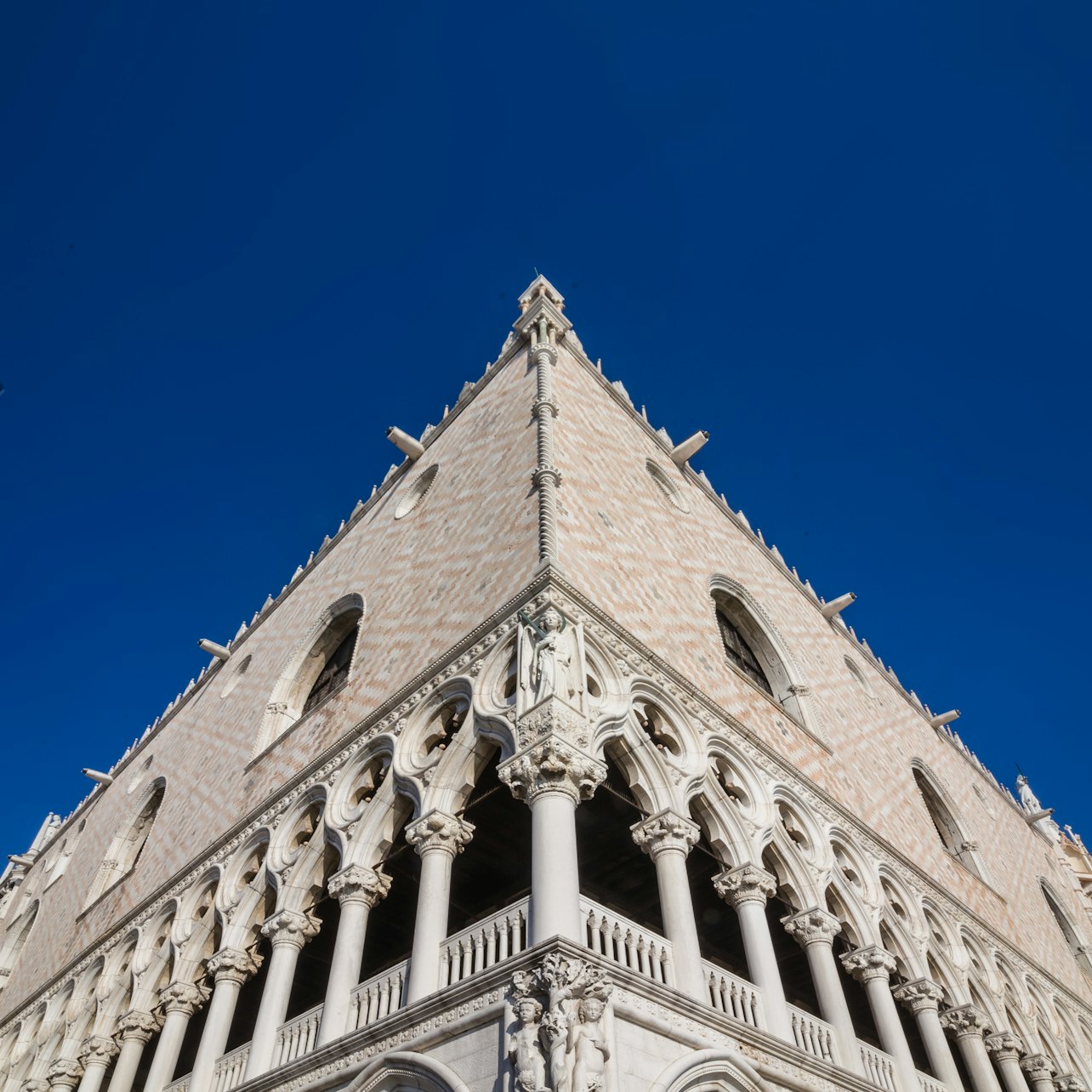
The palace is a landmark example of Venetian Gothic architecture, instantly recognizable for its pale pink Verona marble and white Istrian stone façade. Its design is strikingly unconventional: an ornate upper structure appears to rest lightly on a base of elegant arcades, creating a visual effect that feels both grand and surprisingly delicate.
Inside, architecture was used as a political tool. The monumental Scala d’Oro (Golden Staircase), richly decorated with gilded stucco, was designed to impress ambassadors and visiting officials before they entered the government chambers. Every passageway and room reinforces the authority and wealth of the Venetian Republic.
Art Commissioned for Power
Rather than serving as a traditional museum, the palace displays artworks created specifically for these spaces, closely tied to the state’s identity.
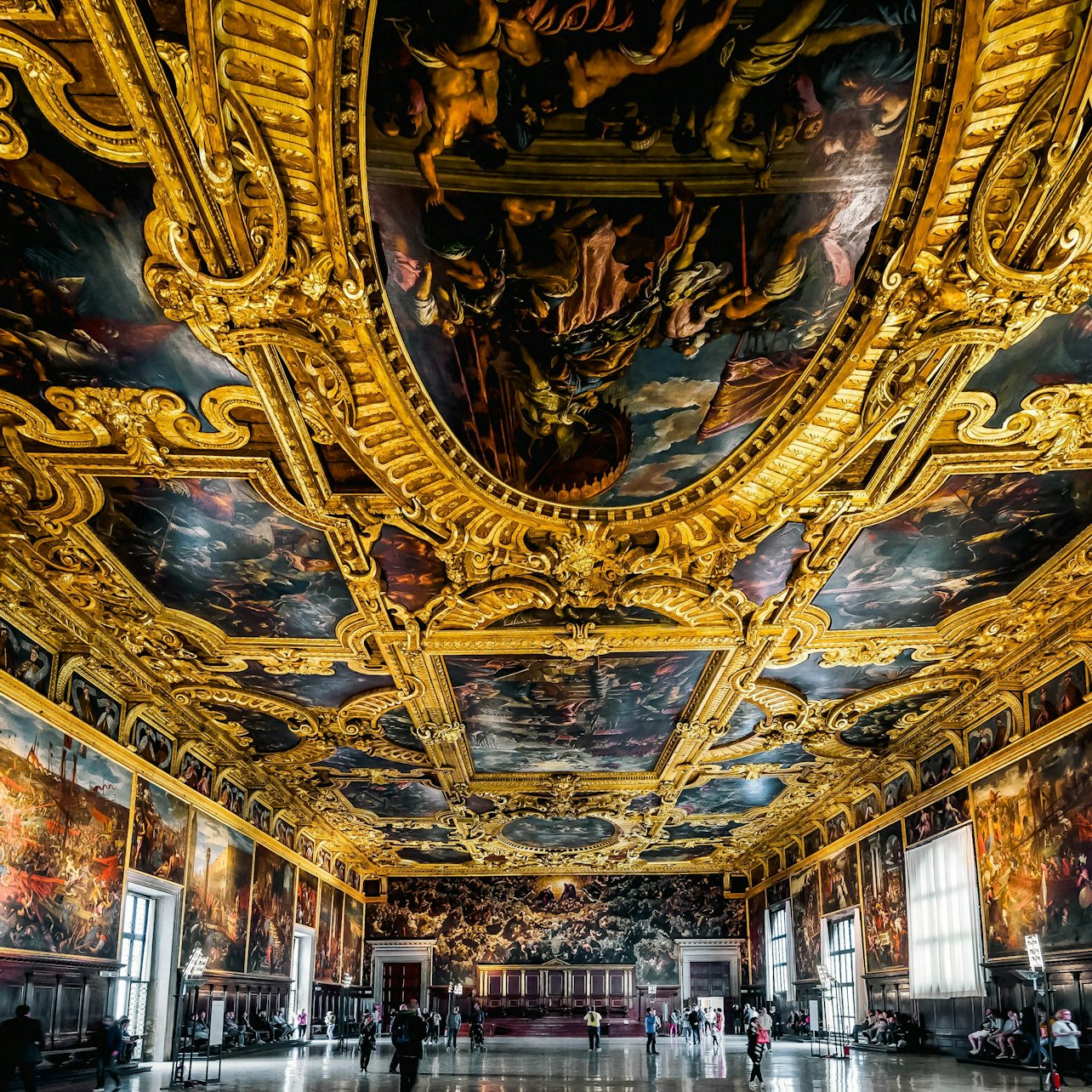
- The Chamber of the Great Council: One of the largest rooms in Europe, dominated by Tintoretto’s Il Paradiso, among the largest oil paintings ever created.
- The Institutional Chambers: Spaces used by governing bodies such as the Senate and the Council of Ten, decorated with works by Veronese, Titian, and Tintoretto that emphasize justice, stability, and divine favor.
These artworks were not decorative alone; they were visual statements reinforcing Venice’s authority.
Crossing the Bridge of Sighs
A visit includes passage through the enclosed Bridge of Sighs, linking the palace to the New Prisons. According to legend, prisoners sighed as they glimpsed the lagoon for the last time through its small stone windows. While romanticized over time, the bridge remains a powerful symbol of Venetian justice.
Beyond the bridge, visitors can explore historic detention areas. The lower Pozzi were damp cells used for ordinary prisoners, while the upper Piombi, located beneath the lead roof, held more privileged inmates. The latter are famous for the escape of Giacomo Casanova in 1756, one of the palace’s most enduring stories.
Practical Visitor Information
The Doge’s Palace is consistently busy, and advance planning improves the experience.
- Location: San Marco, 1, 30124 Venezia, adjacent to St. Mark’s Basilica.
- Getting there: Vaporetto stops San Zaccaria, San Marco Vallaresso, or San Marco Giardinetti.
- Timing: Early morning or late afternoon tends to be less crowded. Allow at least two to three hours for a full visit.
- Accessibility: Elevators provide access to most museum areas, but some prison sections involve stairs and narrow corridors.
- Ticket inclusions: Standard tickets typically include entry to the Museo Correr, the National Archaeological Museum, and the Monumental Rooms of the Biblioteca Marciana.
Plan Your Visit
Booking tickets in advance is strongly recommended, especially during peak travel seasons. Options range from standard admission to guided itineraries that reveal restricted offices and lesser-known areas. Secure your tickets ahead of time to experience one of Venice’s most compelling historic sites without unnecessary waiting.
Ongoing Exhibitions
There are currently no ongoing exhibitions
See all ongoing local exhibitions in Venice
Tickets for Doge's Palace