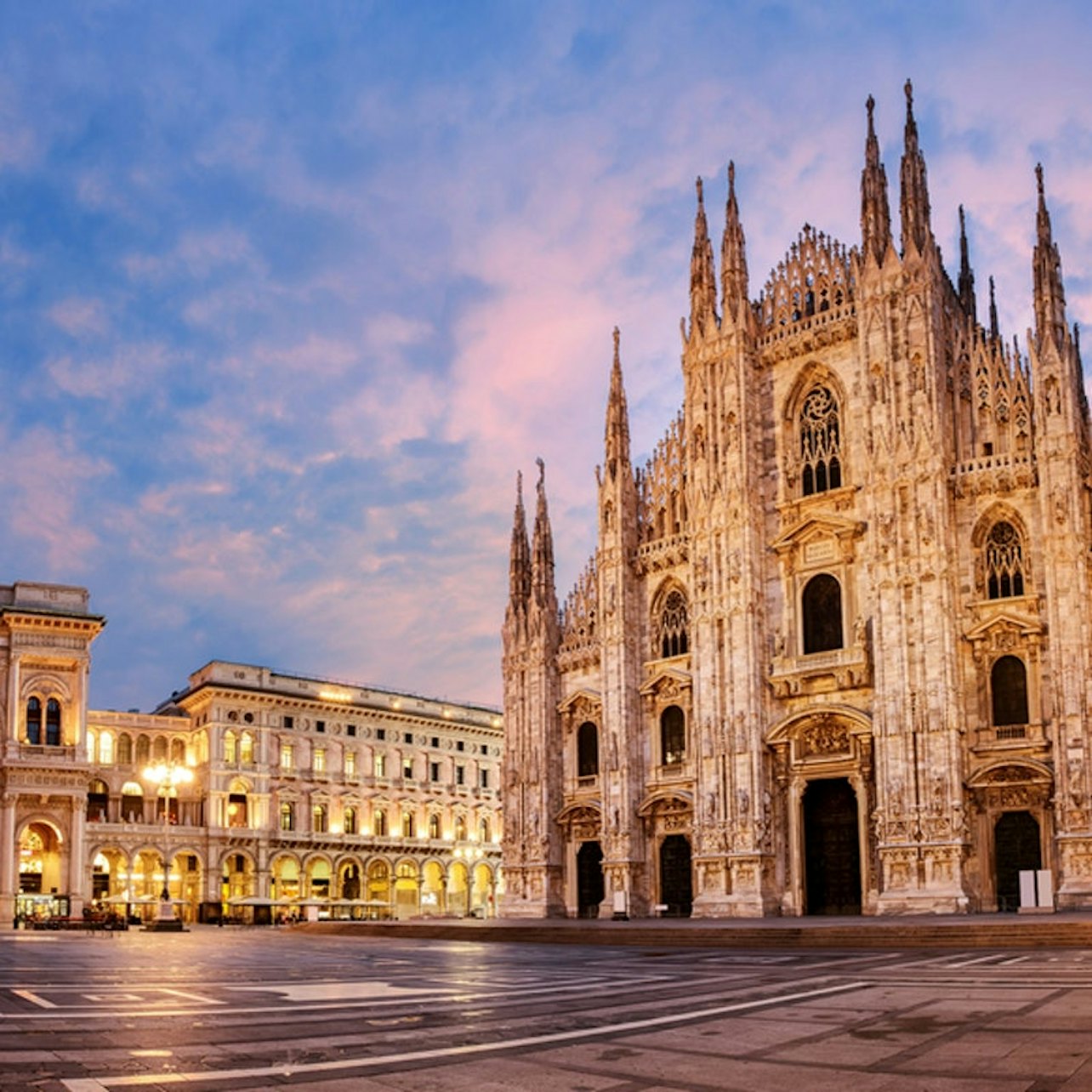
Duomo di Milano
The Duomo di Milano is Milan’s most iconic landmark, celebrated for its extraordinary Gothic architecture, vast interior, and walkable rooftop terraces. Built over centuries from distinctive Candoglia marble, it combines religious importance with remarkable craftsmanship, panoramic views, and layers of history that visitors can explore both above and below ground. A visit typically includes the cathedral interior, the terraces, and key historic features that together explain why the Duomo remains central to Milan’s identity.
A Cathedral Shaped by Centuries
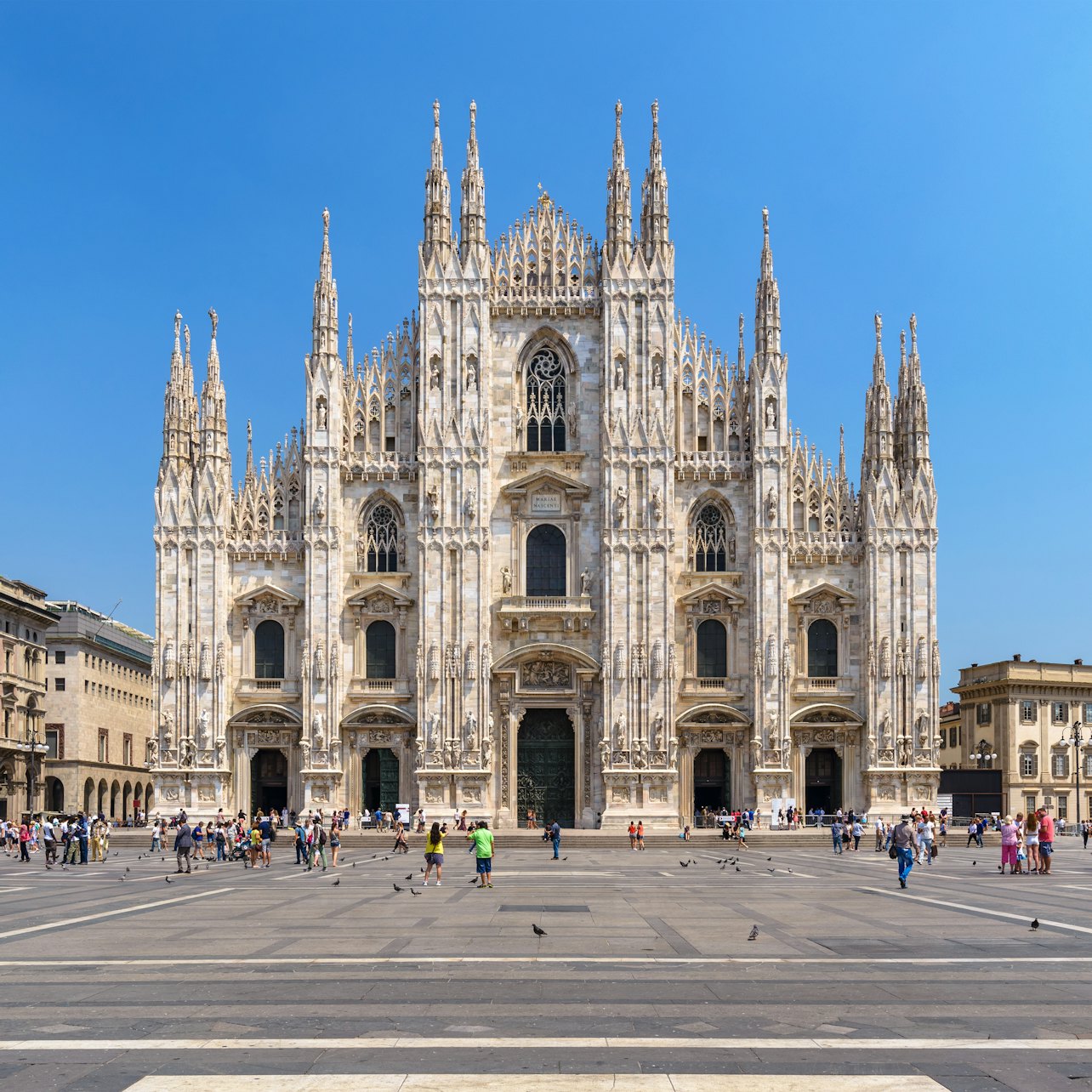
Construction of the Duomo di Milano began in 1386 and continued, with interruptions, into the 20th century. The result is a structure unlike any other in Italy: Gothic in style, yet executed on an unprecedented scale. It stands on the site of earlier religious buildings, reinforcing its role as the spiritual center of the city for over a millennium.
A Marvel of Pink-Hued Marble
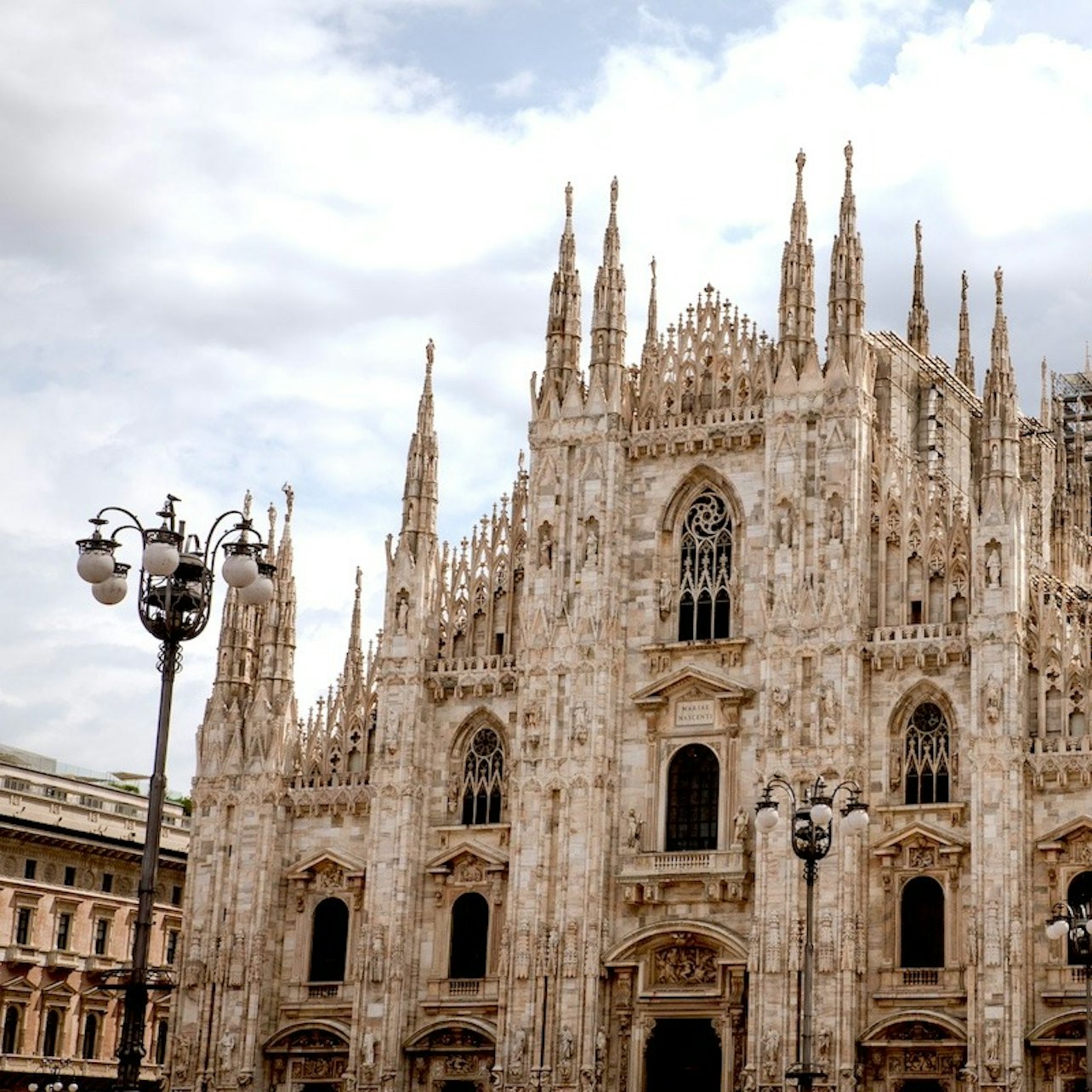
The cathedral is built almost entirely from Candoglia marble, quarried near Lake Maggiore. This pale stone, marked by subtle pink and gray tones, gives the Duomo its unmistakable appearance. The marble was transported to Milan via an elaborate canal network, parts of which still survive in the Navigli area. As daylight shifts, the façade changes color, ranging from soft ivory to warm rose.
The Spires and the Madonnina
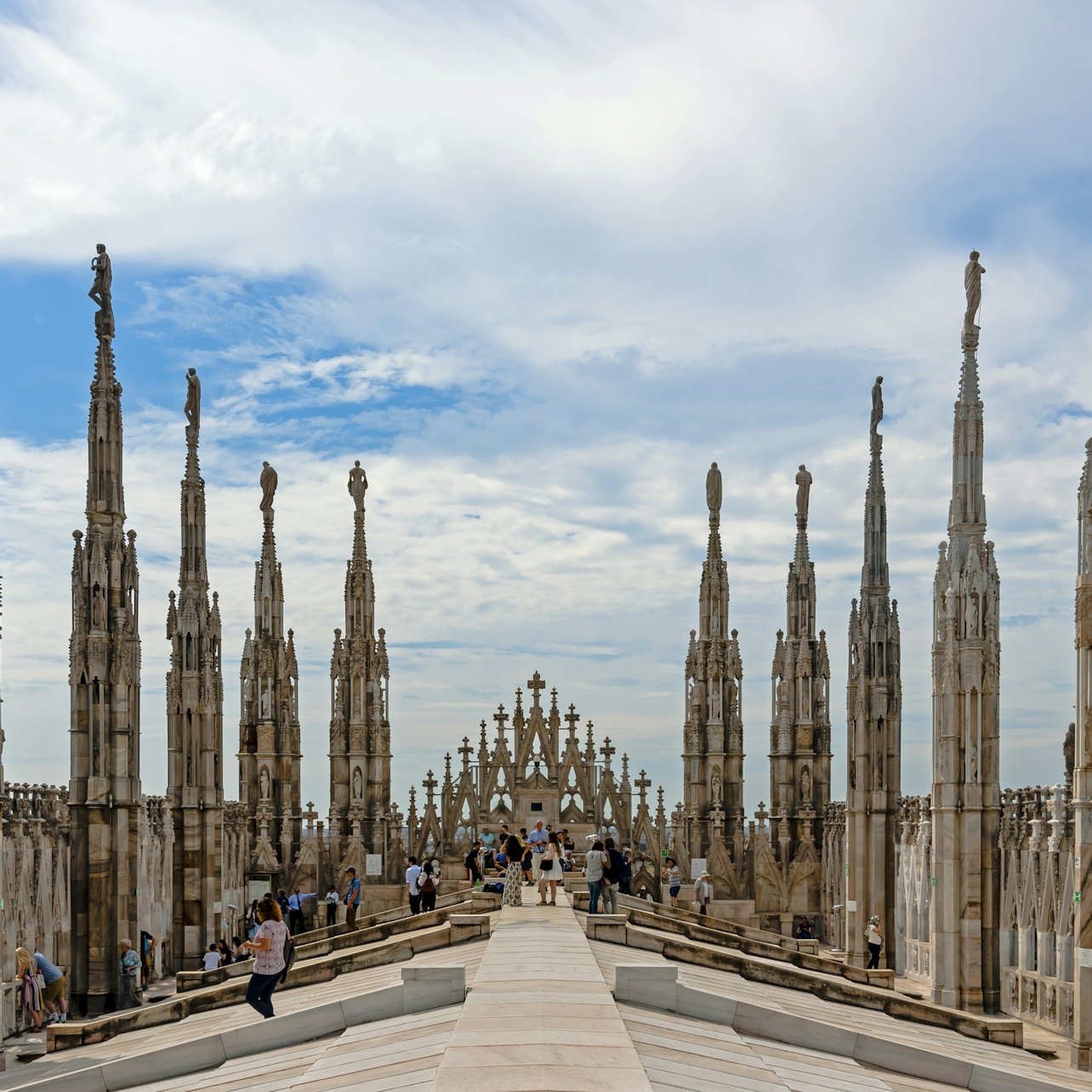
The roofline is crowned by 135 spires and more than 3,400 statues, making it one of the most decorated buildings in Europe. At the highest point stands the Madonnina, a gold-plated copper statue of the Virgin Mary installed in 1774. For much of the 20th century, Milan followed a tradition—rather than a formal law—of ensuring that no building visibly surpassed her height, underlining her symbolic importance to the city.
Walking on the Terraces
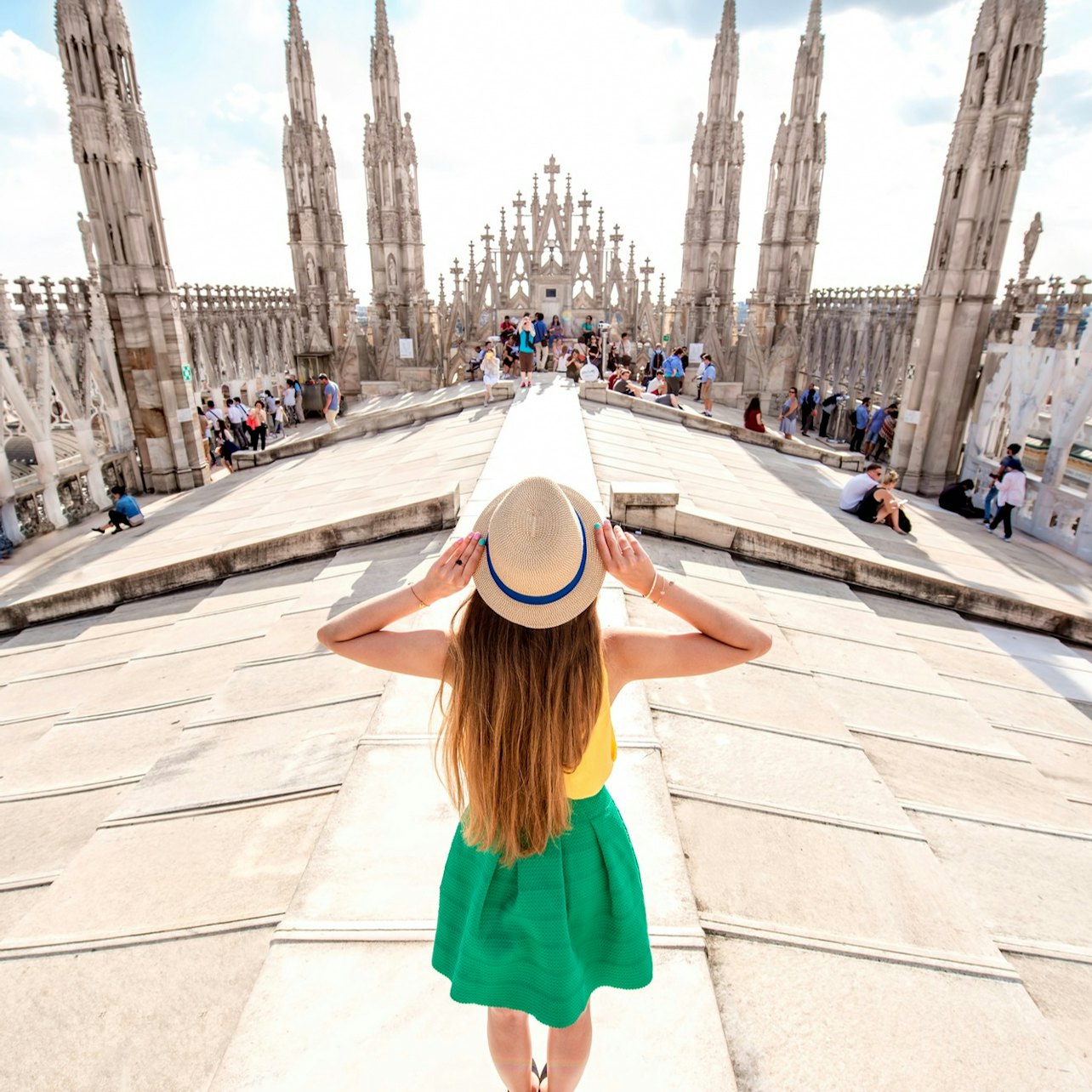
Access to the Rooftop Terraces is one of the Duomo’s defining experiences. From here, visitors can walk among spires, buttresses, and statues, observing details that are impossible to see from the square below. The terraces also provide wide views over central Milan, the modern Porta Nuova skyline, and, on particularly clear days, the distant Alps.
Inside the Cathedral
The interior is monumental, supported by massive pillars and designed to accommodate up to 40,000 people. Notable features include:
- Stained Glass Windows: Among the largest in the world, created between the 15th and 20th centuries, illustrating biblical stories in vivid color.
- The Sundial: A brass meridian line set into the floor, historically used to regulate official time in Milan.
- The Crypt of St. Charles Borromeo: Beneath the main altar, housing the remains of the city’s patron saint.
- The Archaeological Area: Below the parvis, revealing remains of earlier Christian structures, including the Baptistery of San Giovanni alle Fonti.
Practical Visitor Information
As an active place of worship, the Duomo follows specific visitor rules:
- Dress Code: Shoulders and knees must be covered.
- Access: Separate entrances are used for worshippers and ticketed visitors.
- Accessibility: The main floor is accessible; terrace access is via stairs or elevator.
- Hours: Opening times generally run from morning to early evening, with variations for the terraces, archaeological area, and museum.
Plan Your Visit
Plan to spend at least two hours to explore both the cathedral and the terraces. Booking tickets in advance helps you avoid queues and ensures access to all areas of the Duomo di Milano—an essential step when planning your time in Milan.
Ongoing Exhibitions
There are currently no ongoing exhibitions
See all ongoing local exhibitions in Milan
Tickets for Duomo di Milano